
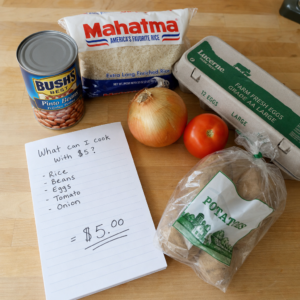
“What can I cook with $5?” is a practical question, and it deserves a practical answer. A small food budget does not leave room for a recipe that quietly assumes you own ten ingredients, a full spice rack, and a freezer.
Here is one flexible meal idea: warm beans and vegetables, served with bread, rice, or another food you already have. The goal is a filling meal that fits your actual checkout total. Prices below are an illustrative shopping plan, not verified prices at your store.
Start with the equipment and food you have
This version needs a saucepan and a stove or other approved cooking surface. A microwave version appears below. You also need safe water, a can opener if the cans do not have pull tabs, and a way to wash your hands and utensils.
Before shopping, check for bread, rice, potatoes, tortillas, or another suitable base. Already having one can free up money for vegetables or another meal. If you have no kitchen, visit Meals Without a Full Kitchen for a plan that better matches your situation.
A sample $5 shopping plan
Suppose you find these package prices locally:
- One can of beans: $1.25.
- One can of mixed vegetables: $1.25.
- One small loaf of bread: $2.00.
The example checkout total is $4.50 before any applicable tax or fees. It counts the full packages you buy today, not just the portion used. The remaining 50 cents gives a little room for a price difference, but it does not guarantee the meal will fit every store.
If the bread costs more, use a base you already have or check another affordable option. If none fits, choose a different meal instead of treating this list as a requirement. Transportation costs also belong in your decision about where to shop.
Make warm beans and vegetables
Choose ready-to-eat canned beans, such as pinto, black, or kidney beans, and vegetables you enjoy. Check labels for ingredients you need to avoid. This recipe does not use dried beans, which require different preparation.
- Wash your hands and prepare a clean cooking area. Open the cans safely.
- Drain the beans and vegetables. Rinse them if you have safe water and want to remove some of the packing liquid.
- Put them in a saucepan with a few spoonfuls of water. Stir and warm over moderate heat according to the product instructions. Add a little more water if needed to keep the mixture from sticking.
- Serve with bread or your available base. If you already have seasoning, add a little to taste. Buying seasoning is optional.
The mixture can provide about two modest servings, depending on can size and appetite. Bread can make the meal more substantial. This is a meal idea, not a promise that one recipe meets everyone’s nutritional needs or feeds a family for $5.
Use a microwave if that is your cooking option
Put the drained beans and vegetables in a microwave-safe bowl with a little water. Never microwave the metal cans. Cover with a microwave-safe lid that allows steam to escape, then heat according to the food and appliance directions.
Stir carefully and check that the food is heated evenly before eating. The bowl and steam can be hot. If you cannot safely handle the equipment, choose a meal that does not require heating.
Change the meal without buying a whole new list
If you have cooked rice stored safely, use it as the base. If you have a tomato or a little salsa, add it. A potato cooked according to safe appliance directions can also work. Frozen vegetables are an option only when you have appropriate storage or can prepare them promptly.
Choose substitutions for your own dietary needs. Beans may not suit every medical diet, and bread may contain allergens. Read labels and follow any individual advice you have received. Simple does not mean the same food works for everyone.
Keep leftovers safely, or cook only what you need
USDA advises refrigerating perishable leftovers within two hours, or within one hour when temperatures are above 90 F. Keep the refrigerator at 40 F or below. Use refrigerated leftovers within three to four days and reheat them to 165 F. Read the USDA leftovers guide.
If you have no reliable refrigeration, choose amounts you can eat promptly. An opened can is no longer shelf stable. Do not save a bowl in a parked car or assume it is safe because it smells normal.
Make the next shopping trip a little easier
Use our unit price calculator when package sizes make comparison confusing. Remember that a lower unit price can still require more cash than you have today.
Our free meal planner can help you build another meal around remaining bread or pantry food. If $5 cannot cover what you need, explore food assistance. Needing more food is a reason to seek support. You deserve enough to eat.