
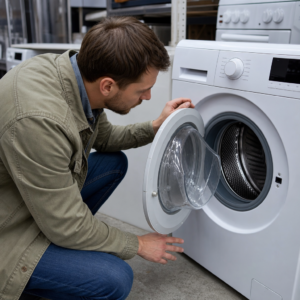
Buying used appliances can help when a refrigerator, washer, or cooker fails and there is little money for a replacement. It can also create an expensive problem if the item does not fit, does not work, or needs costly installation.
The goal is not to become an appliance technician. It is to ask useful questions, understand the complete cost, and know when you need professional help. A low price is worth considering only when the appliance is suitable and safe for your home.
Check what you are allowed to replace
If you rent, contact the owner or manager about a failed appliance before buying anything. Responsibility for repairs or replacement depends on your lease and local rules. Do not spend money replacing an item without understanding the agreement.
If you own the appliance, ask whether a repair estimate makes sense. An estimate may have a charge, so confirm that first. Compare the proposed repair with replacement costs, including delivery and installation. Do not attempt electrical or gas repairs you are not qualified to perform.
Write down the exact space and connections
Measure the appliance space and the route through doors, stairs, and hallways. Include room needed for doors to open, ventilation, and service access as specified by the manufacturer. A refrigerator that fits its recess may still be impossible to move through your entrance.
Note the existing power supply, water connections, drain, venting, and any gas connection. Compatibility should be confirmed by someone qualified when you are unsure. Similar-looking appliances can have different installation requirements.
Take measurements and clear photographs for reference. Ask the seller for the exact model number so you can find the manufacturer’s instructions rather than guessing from the appearance.
Ask about age, history, and repairs
Ask how long the seller has owned the appliance, why it is being sold, and whether it has known faults. Request the model and serial numbers, maintenance information, and any repair records they have.
Words such as refurbished or tested do not explain what work was done. Ask who performed it, what was checked, and whether the seller offers written coverage. Missing records do not prove a problem, but they leave you with less information.
Check for recalls before paying
Search the U.S. Consumer Product Safety Commission’s recall database using the brand and model details. Review any applicable notice and the exact remedy. A similar model name is not enough to determine whether a particular item is affected.
If the appliance matches a recall, contact the manufacturer or follow the recall instructions before using or purchasing it. Ask for evidence if a seller says the required remedy was completed. A clean search does not establish that an appliance is in good condition.
Look at the condition without opening hazardous parts
Check for visible damage, damaged cords, missing parts, heavy corrosion, leaks, and obvious modifications. Look at seals, drawers, shelves, controls, and exterior connections. Strong odors or signs of pest activity deserve questions.
Do not remove protective covers or reach into electrical components to inspect them yourself. A wiped-down exterior can look attractive while important parts are worn. When the condition is uncertain, ask a technician or choose another option.
Ask for a meaningful demonstration
A light turning on does not show that a refrigerator keeps food cold. A washer powering up does not show that it completes a cycle without leaking. Ask what you can observe under a safe, properly connected setup.
For a refrigerator, request evidence that it has been operating at an appropriate temperature. For a washer, ask about a demonstrated wash and drain cycle. Follow manufacturer instructions and do not improvise connections just to perform a test.
If the seller cannot demonstrate operation, treat that as uncertainty rather than a guarantee. A technician’s inspection may cost money, but it can be useful when the purchase would use most of your available funds.
Add delivery and installation to the price
Write down the appliance price, delivery, stairs or access charges, installation, required parts, and removal of the old unit. Confirm who is responsible if damage occurs during transport. Ask whether delivery includes placement or only leaving the item at the entrance.
Use qualified installation help where required, especially for gas connections or changes to wiring. Ask for a written quote. Follow the manufacturer’s transport and setup instructions, including any waiting period before starting a refrigerator after moving it.
Our Savings Lab can help with simple comparisons. A $150 appliance with $200 in additional costs should be compared as a $350 purchase, not a $150 bargain. Those figures are an example, not a price estimate.
Read the return and warranty terms
Ask what happens if the appliance fails after delivery. Get any warranty, return deadline, exclusions, and transport charges in writing. Private sellers may offer no return option. Do not assume that every secondhand purchase includes protection from the seller.
Keep the listing, receipt, model information, and written promises. Decide whether the uncertainty fits your budget before handing over money.
Choose what leaves you better off
If buying now is impossible, consider temporary options that fit your home. Our limited-kitchen meal guide may help during a cooking or refrigeration gap. For immediate spending, read My Money Has to Last Until Friday.
You deserve a working household, not pressure to accept the first offer. A careful question today can protect money you need for tomorrow.