

Who needs cable-or even friends-when you’ve got The Book of Unusual Knowledge? 📚 This 704-page brain buffet is the perfect cheap gift for anyone who’d rather impress strangers with random trivia than pay for streaming services. From politics to penguins, it’s packed with info you didn’t know you needed and definitely can’t use in small talk. Why go out when you can stay in, learn weird facts, and become the most fascinating cheapskate at the next potluck?

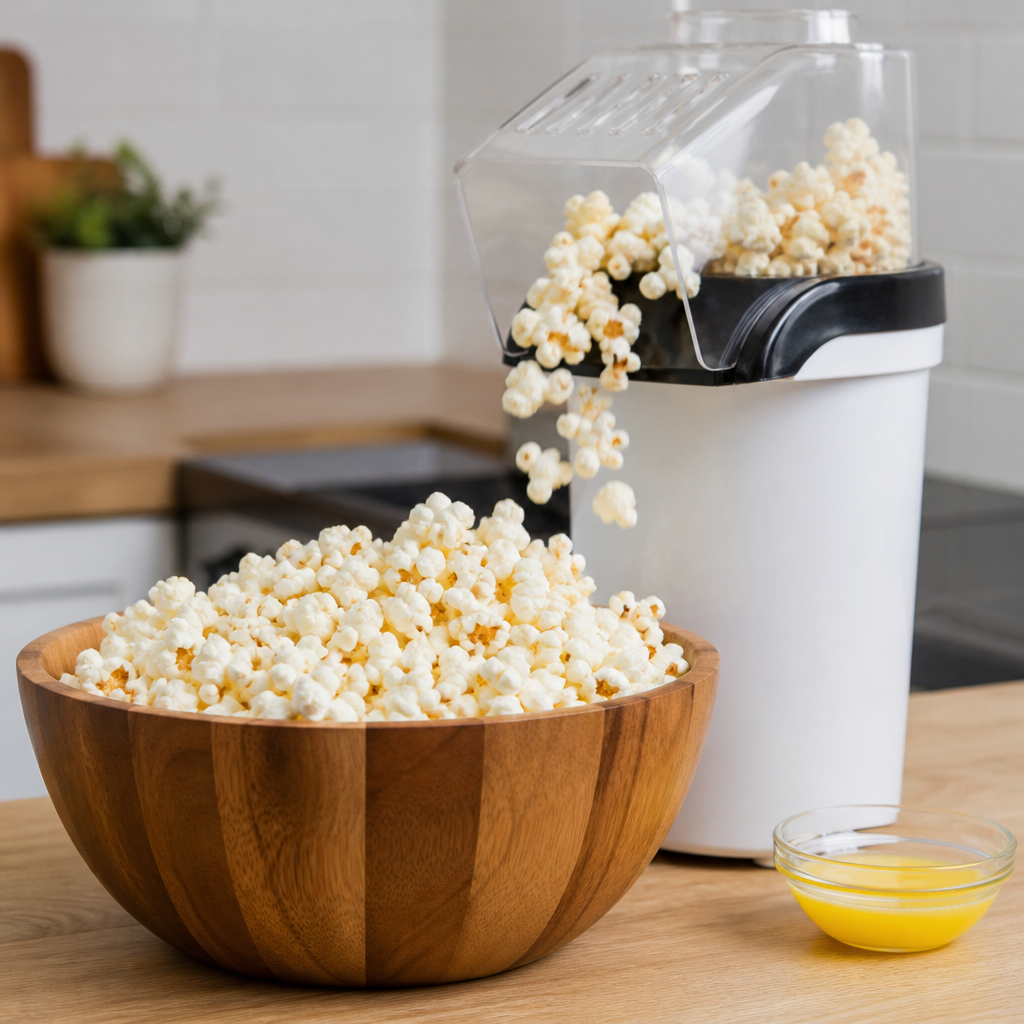
Fresh Popcorn for Pennies: A Guide to Air Popping at Home
Warm, fluffy popcorn is one of the most cheerful snacks around, and one of the thriftiest. A bag of plain kernels makes bowl after bowl, and air popping lets you choose exactly what goes on top, from a sprinkle of salt to cinnamon sugar.
Pull up a chair, class, because today’s lesson comes with a snack! Popcorn is a whole grain, it is fun to make, and plain kernels are among the most budget-friendly foods on the grocery shelf. Let Professor Ima show you how to turn a humble bag of kernels into movie-night magic.
Why Kernels Beat Microwave Bags
Microwave popcorn is handy, but each bag is a single portion with flavorings already chosen for you. A jar or bag of plain kernels can make many bowls, and you decide how much butter, oil or salt to add. Check the unit price on the shelf tag and you will usually see a happy difference.
How to Make Perfect Popcorn at Home
- Measure your kernels. Follow your popper’s directions. A few tablespoons of kernels can make a generous bowl.
- Keep kernels fresh. Store them in an airtight jar in the pantry. Fresh kernels pop up big and fluffy.
- Season while warm. A light mist of oil or a drizzle of melted butter helps seasonings stick. Toss in a big bowl as you sprinkle.
- Use a fine salt. Finely ground salt clings better than coarse salt. You can whirl regular salt in a spice grinder for a few seconds.
- Store leftovers well. Popped popcorn keeps its crunch for a day or two in a sealed container or bag.
Tasty Topping Ideas From Your Pantry
- Cinnamon and a little sugar for a sweet treat
- Garlic powder and grated Parmesan for a savory bowl
- Chili powder and a squeeze of lime for a zesty kick
- Nutritional yeast for a cheesy flavor many people love
- Dried Italian herbs with a little olive oil
- A handful of raisins or peanuts mixed in for a homemade snack mix
Try It Free First
You can pop kernels with what you already own. On the stove, warm a little oil in a large pot with a lid, add a few test kernels, and when they pop, pour in a single layer of kernels. Cover, shake the pot now and then, and take it off the heat when the popping slows. Another popular trick is putting a small amount of kernels in a plain brown paper lunch bag, folding the top over, and microwaving until the pops slow down. Stay nearby and listen carefully either way.
Where an Air Popcorn Popper Fits In
A hot air popper uses swirling heated air instead of oil to pop kernels. You pour kernels in, set a bowl under the chute, switch it on, and fluffy popcorn tumbles out in a few minutes. Since no oil is needed for popping, you choose how much, if any, to add afterward. Many people like poppers because they are quick, simple and easy to put away.
An air popper suits families who enjoy movie nights, anyone who snacks on popcorn often, and folks who like a light, wholesome treat. The button here is a search for this type of product, so compare listings, reviews, sizes and return terms before you pick one.
What to Look For When Comparing
- Batch size: Check how many cups it pops at once for your household.
- Measuring cup: Many include a cup that doubles as a butter melter.
- Easy cleanup: Removable parts that wipe or wash easily are a plus.
- Compact storage: Note the size if cupboard space is precious.
- Cord and switch: A simple on and off switch and a comfortable cord length are handy.
Professor Ima’s Wrap-Up
Some of life’s best treats are also the simplest. A bag of kernels, a few pantry seasonings and a big bowl add up to a cozy evening for very little money. So queue up a favorite movie, invite a friend, and let the popping begin. Class dismissed, and save me a handful!
As an Amazon Associate, Cheap101 earns from qualifying purchases, at no extra cost to you. Browse more handy finds in the Student Store.

Novelty Money Rolling Papers
Looking for a cheap gift that’s high on laughs and low on legality (just kidding-kind of)? These faux money rolling papers are perfect for the thrifty rebel with a sense of humor. Made with organic edible ink and designed to burn slow, they bring big Cartel vibes on a dollar store budget. Because nothing says “ballin’ on a budget” like pretending your stash is wrapped in hundreds… even if your wallet says otherwise. 💸😎
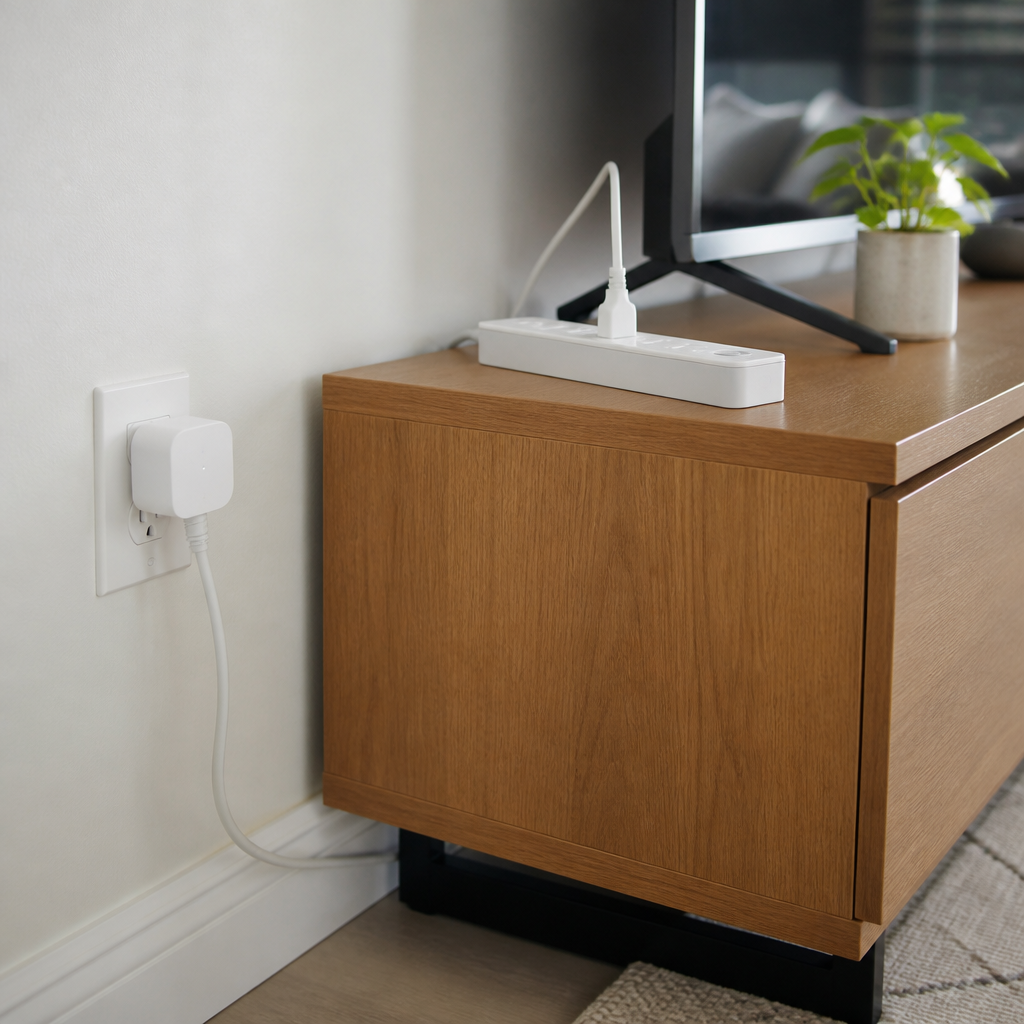
How to Cut Standby Power Easily (Smart Plugs and Power Strips)
Many gadgets quietly sip electricity even when they look switched off. The good news is that one click or a simple schedule can put them truly to sleep, so your home stays just as comfy and your energy dollars stay with you.
What Is Standby Power, Anyway?
Gather round, class. Standby power (some folks call it “phantom” power) is the small amount of electricity that many devices use while they are plugged in but not doing anything useful. That glowing clock on the microwave, the little red light on the TV, the charger left in the wall: each one is ready and waiting, and waiting uses a bit of energy. One device alone is tiny. A whole house full of them, running all day and all night, can add up over a year.
How to Find and Tame Your Energy Sippers
- Do a glow walk. Some evening, turn off the main lights and stroll through your home. Every little light or warm power brick is a clue.
- Group by spot. Most homes have a few clusters: the TV corner, the computer desk, the kitchen counter, and the nightstand. These are your best places to save.
- Sort what can sleep. Game consoles, sound bars, DVD players, printers, speakers, and phone chargers can usually be fully off when not in use.
- Know what should stay on. Keep the refrigerator, freezer, medical equipment, internet router (if you need it overnight), security devices, and anything that must keep a schedule plugged in and powered.
- Unplug chargers when the battery is full. It is a tiny habit with a nice tidy feeling, too.
Try It Free First
You may already own the tools for this lesson. Many homes have an ordinary power strip with an on and off switch tucked behind the TV. Plug your entertainment gear into it, then flip the switch off at bedtime. Also peek in your device menus. Many TVs and game systems have an “energy saving” or “eco” setting that reduces what they use while waiting. Turning those on costs nothing at all.
Where Smart Plugs and Switched Power Strips Fit In
If reaching behind furniture is not your idea of fun, these handy helpers do the remembering for you.
- Switched power strips put a big, easy-to-reach switch on a group of devices. Some have individual switches for each outlet, so you can leave one device on and turn the rest off.
- Smart plugs plug into the wall, and you plug a device into them. Using a phone app or a voice assistant, you can set schedules, like turning the coffee maker corner off at night and the lamp on at dusk. Some models even show how much energy a device uses, which makes a fun little science project.
- Advanced or “smart” power strips can sense when a main device, like a TV, turns off, and then switch off the extras plugged in with it.
Smart plugs suit folks who enjoy using a phone app, while a simple switched strip is perfect for anyone who likes things easy and app-free. Either way, the goal is the same: off really means off.
What to Look For When Comparing
- Safety listing: look for a recognized safety certification mark such as UL or ETL.
- Power rating: make sure the plug or strip handles the devices you plan to connect.
- Switch placement: a switch on top or on a remote is easier to reach than one on the back.
- App and Wi-Fi needs: for smart plugs, check that it works with your phone and home network.
- Size: slim plugs leave room for the second outlet.
- Reviews and return terms: compare a few listings before choosing.
Professor Ima’s Wrap-Up
Every gadget deserves a good night’s sleep, and so does your budget. Take a glow walk, group your devices, and let a switch or a schedule tuck them in. Small savings that happen every hour of every day are my very favorite kind. Gold star for you!
As an Amazon Associate, Cheap101 earns from qualifying purchases, at no extra cost to you. Browse more handy finds in the Student Store.
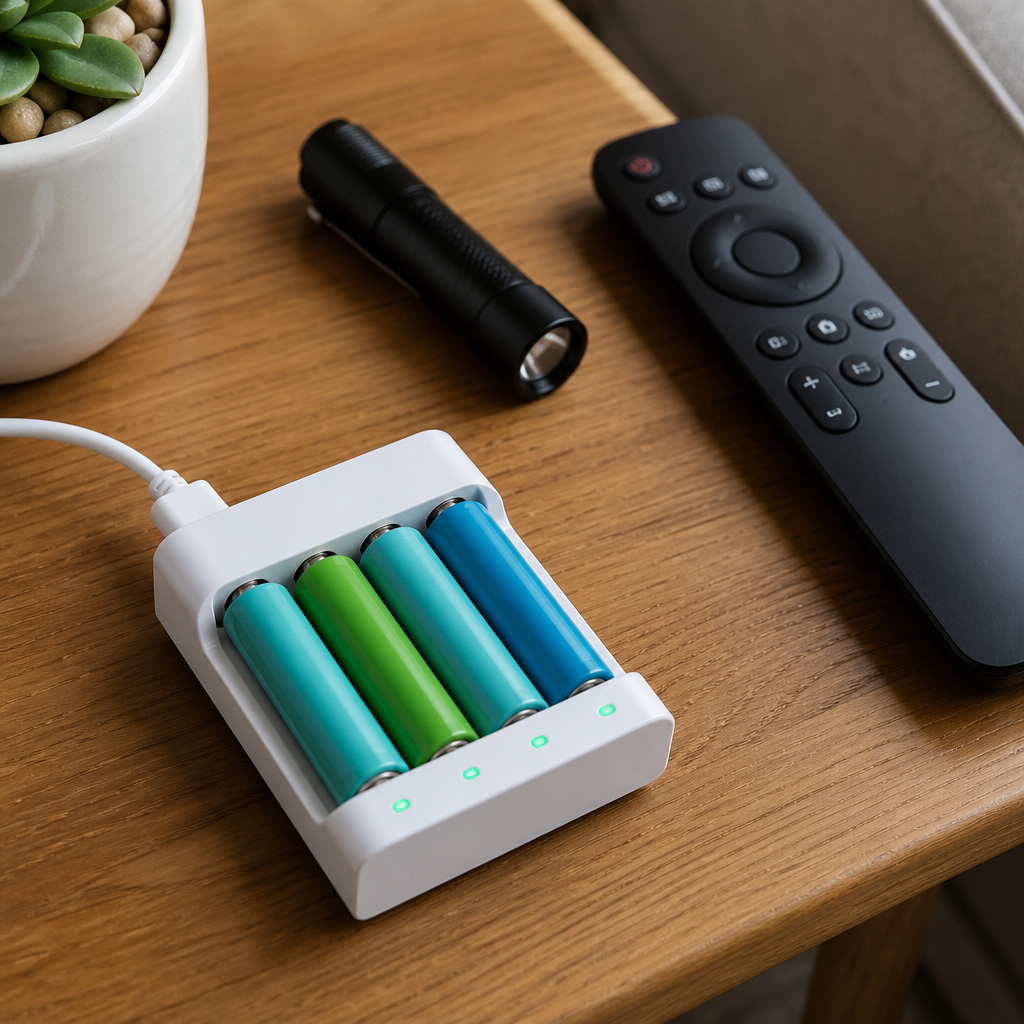
Power Your Home for Less With Rechargeable Batteries
Remotes, game controllers, flashlights and toys can keep humming along on the same set of batteries for years. With a good charger and a few simple habits, rechargeable batteries can be one of the thriftiest upgrades in your whole home.
Good afternoon, class! Let’s talk about the little cylinders that power so much of daily life. Single-use batteries are handy, but each one is used once and then it is done. Rechargeable batteries can be refilled with power over and over, which makes them a favorite of thrifty households everywhere.
How to Get the Most From Rechargeable Batteries
- Start with your busiest gadgets. Game controllers, wireless mice and keyboards, toys, flashlights and digital cameras go through batteries quickly, so they are the best place to begin.
- Keep a charged set ready. Own a few more batteries than you need so a fresh set is always waiting while the other set charges.
- Charge in pairs or sets. Batteries that work together in a device do best when they are charged and used together.
- Use the matching charger. Follow the battery maker’s directions and use a charger designed for that battery type.
- Store them cool and dry. A drawer or a small battery case keeps them organized and ready.
- Mark your sets. A dot of colored nail polish or a colored sticker helps you keep sets together.
Where Single-Use Batteries Still Shine
Honest professors share the full picture. Very low-drain items, such as wall clocks, may run so long on one battery that rechargeables offer less advantage there. Safety devices such as smoke alarms and carbon monoxide alarms should always use exactly the type of battery the manufacturer recommends, so check the manual. For everything else that gobbles power, rechargeables are a lovely fit.
Try It Free First
Before buying anything, gather every battery-powered item in your home and make a quick list of which battery sizes they use and how often you change them. You might find that a few gadgets use most of your batteries. Also look for devices that can be plugged in or charged by USB instead. Many people discover they already own chargers and cords for this. And when single-use batteries are finished, look for a battery recycling drop-off at hardware or home stores in your area.
Where Rechargeable Batteries and Chargers Fit In
The most common household rechargeables are nickel-metal hydride (NiMH) batteries in AA and AAA sizes. Many are rated to be recharged hundreds of times, and “low self-discharge” versions are designed to hold their charge well while sitting in a drawer. Kits often bundle batteries with a charger, which is an easy way to start. Some chargers have individual indicator lights for each battery so you know exactly when each one is ready.
They suit families with kids’ toys, gamers, photographers, and anyone who uses a lot of remotes and flashlights. The button on this page is a search for this type of product, so compare listings, reviews, sizes and return terms before choosing.
What to Look For When Comparing
- Sizes: Make sure the set covers the sizes you use most, often AA and AAA.
- Capacity (mAh): Higher capacity can mean longer run time per charge.
- Low self-discharge: Helps batteries stay ready in storage.
- Charger features: Individual bay indicators and automatic shutoff when full.
- Rated recharge cycles: Check how many times the maker says they can be recharged.
- Storage case: Keeps sets organized and contacts protected.
Professor Ima’s Wrap-Up
Every time you pop a recharged battery into the remote, give yourself a little gold star. You are keeping money in your pocket and batteries out of the trash. Charge them up, keep a spare set ready, and let the good times roll. Class dismissed!
As an Amazon Associate, Cheap101 earns from qualifying purchases, at no extra cost to you. Browse more handy finds in the Student Store.

Cheap101 T-Shirts
Cheap 101 Graduate of Distinction T-Shirt – Your Badge of Honor in Savings!
BUY YOUR SHIRT HERE
T-shirts are more than just comfy clothing—they’re a statement, a lifestyle, and sometimes even a conversation starter. And if you’re a fan of savvy spending, saving money, and smart living, we’ve got your next wardrobe essential: the official Cheap 101 T-Shirt! When you rock a Cheap 101 tee, you’re not just dressing for comfort—you’re letting the world know you’re smart about your spending. It’s more than fabric, it’s a financial philosophy. Get your Cheap 101 T-shirt today and join the growing community of financially empowered individuals who know how to live large without spending big.

Rechargeable Mini Bag Heat Sealer & Cutter
Stop wasting money on stale chips, crackers, and cereal. The Rechargeable Mini Bag Heat Sealer creates an airtight seal on opened plastic and foil bags in seconds without requiring preheating. Powered by a built-in rechargeable battery with convenient USB charging, this handheld kitchen tool eliminates the recurring cost of replacement disposable batteries.
The integrated dual-action design includes a concealed safety cutter to slice open packaging cleanly and a magnetic backing that sticks right to your refrigerator door so it is always within reach. By keeping air and moisture out of pantry staples and frozen foods, this pocket-sized tool pays for itself after rescuing just a few bags of groceries from the trash.
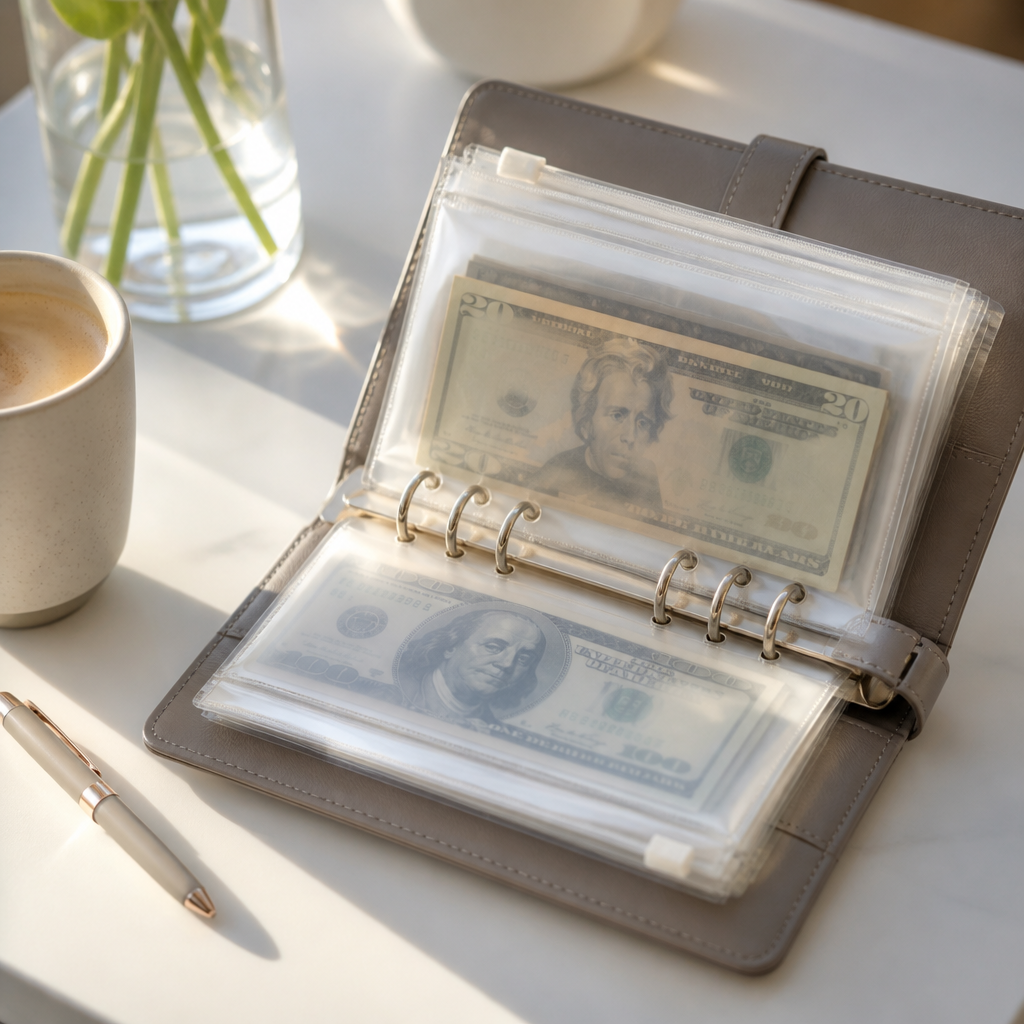
The Complete Guide to Cash Envelope Wallets and Cash Stuffing Binders
Picture every dollar with its own cozy little home. A six-ring cash envelope wallet with clear zippered pockets lets you see your grocery and fun money at a glance, and Professor Ima walks you through your very first cash stuffing session on payday.
Welcome to module two of the Cheap101.com student store field guide series. In an era dominated by tap-to-pay smartphones, one-click online checkout buttons, and contactless credit cards, staying within a monthly household budget has become remarkably challenging. Digital payments remove physical friction from the act of purchasing, leading to insidious overspending on groceries, dining out, and impulse shopping. To regain absolute control over personal cash flow, millions of disciplined savers are turning back to a tangible classic: the cash envelope wallet system.
Popularized by traditional debt-elimination programs and modern cash stuffing communities, the envelope method relies on a simple rule: when the physical paper cash allocated to a specific spending category runs out, spending stops until the next pay cycle. Today’s guide explores the mechanics of modern budget binders, details what to look for in a durable wallet system, and walks you through setting up your first zero-based cash budget.
1. The Psychology Behind Cash Stuffing
Modern behavioral finance proves that human beings process cash transactions far differently than digital card swipes. When you hand a cashier a fifty-dollar paper bill, your brain registers immediate loss aversion. You physically observe your resources shrinking, which prompts natural hesitation and encourages conscious spending decisions.
When you swipe a plastic card, that friction vanishes entirely. You do not see the loss of funds until an electronic statement arrives weeks later. Cash envelope budgeting reintroduces healthy boundaries to your most vulnerable budget categories:
- Groceries and Household Supplies: Eliminates spontaneous cart additions and luxury impulse snacks.
- Dining Out and Takeout: Sets a firm, tangible limit on restaurant spending.
- Personal Discretionary Spending: Allocates guilt-free fun money without threatening essential household bill obligations.
- Sinking Funds: Builds dedicated savings reserves for predictable non-monthly expenses like vehicle maintenance, holiday gifts, and pet checkups.
2. Anatomy of an Effective Cash Envelope Wallet
Early iterations of the envelope system relied on flimsy white bank envelopes that tore easily and spilled coins. Today’s modern systems are built around specialized, all-in-one organizer wallets and binders designed for durability and security:
A. Six-Ring Refillable Binder Architecture: The premier standard for cash management is the A6 six-ring binder. The ring mechanism allows you to add, remove, or rearrange envelopes effortlessly as your monthly budget priorities evolve.
B. Clear Zippered PVC or Vellum Envelopes: High-grade cash envelopes feature transparent, waterproof PVC with secure slide zippers. Transparent walls let you check your remaining cash balance at a glance without opening the pouch, while smooth zippers keep bills and coins securely enclosed inside your purse or backpack.
C. Integrated Card Slots and RFID Protection: A functional budget wallet should replace your everyday handbag wallet completely. Look for models crafted from durable synthetic leather that include built-in debit card slots, pen loops, receipt pockets, and RFID-blocking liners to protect your essential payment cards from electronic scanning.
D. Dual-Sided Expense Tracker Sheets: Quality budget systems include heavy-stock ledger cards that slide directly inside each envelope. Every time you remove cash to make a purchase, jot down the date, store name, and remaining balance. This creates continuous accountability throughout the pay cycle.
3. Step-by-Step Setup: Your First Cash Stuffing Session
Setting up your wallet takes less than thirty minutes on payday. Follow this reliable four-step protocol:
- Identify Your Variable Categories: Keep fixed expenses (such as rent, mortgage, utilities, and insurance) in your bank account for automated online bill pay. Use cash envelopes strictly for variable categories where you frequently overspend (groceries, dining out, gas, entertainment, and clothing).
- Label Your Envelope Tabs: Use the included adhesive label stickers to mark each clear envelope with your designated categories. Write clearly and keep categories broad to prevent micromanagement fatigue.
- Withdraw Exact Denominations: Calculate your exact bi-weekly cash allocation. Visit your local bank teller and request specific denominations (tens, twenties, and fives) so you can stuff each envelope with the exact balance required.
- Respect the Empty Envelope Boundary: If your dining-out envelope is empty by Wednesday night, cook a meal using pantry staples at home. Never borrow cash from the grocery envelope to fund restaurant dining. Maintaining category integrity is the secret to building lasting financial discipline.
Ready to Take Control of Your Daily Spending?
Explore our curated collection of top-rated A6 cash envelope wallets, budget binders, and all-in-one cash stuffing systems.
Transforming your financial life does not require complex spreadsheets or restrictive deprivation. By swapping thoughtless card taps for intentional cash stuffing, you give every single dollar a clear purpose and watch your savings account grow week after week.

How to Make Saving Fun With Goal Trackers and Scratch-Off Posters
Saving money can feel like a game when you can see your progress. Coloring in a chart, filling a thermometer, or scratching off a square each time you set money aside turns every deposit into a small celebration. Here is how to make saving fun.
Why Seeing Progress Feels So Good
Hello, class! Saving can sometimes feel invisible. The money goes into an account, and you do not see much happen. A visual tracker changes that. Each little square you fill shows you are moving closer to your goal, and that cheerful feeling encourages you to keep going.
How to Set Up a Fun Savings Goal
- Pick something exciting. A trip to see family, a new recliner, a holiday fund, or a cozy emergency cushion.
- Put a number on it. Decide the total, like $600 or $1,500.
- Break it into chunks. Divide the total into squares. A $1,000 goal could be 50 squares of $20 each.
- Choose a deadline. Divide the total by the number of weeks or months to see how much to save each time.
- Post it where you will see it. The fridge, a closet door, or right by your desk.
- Mark every deposit. Color, sticker, check, or scratch. Make it a little ritual.
Fun ideas to try
- Thermometer chart: color it up as you save, just like a fundraiser.
- Random squares: fill a grid with different amounts ($5, $10, $25) and pick whichever fits your week.
- Picture puzzle: print a photo of your goal, cut it into pieces, and add a piece each time you save.
- Milestone treats: celebrate every 25 percent with a free reward, like a picnic or movie night at home.
Save as a team
Couples, roommates, and families can share one chart for a group goal. Grandkids especially love coloring squares. It turns saving into something everyone enjoys together.
Try It Free First
Draw your own chart on plain paper with a ruler and crayons or colored pencils. Graph paper works great for grids. Many free printable savings trackers are available online too. Tape it up and start coloring today.
Where Savings Trackers and Scratch-Off Posters Fit In
Ready-made savings tracker charts and scratch-off posters come pre-printed with goal amounts and fun designs. Scratch-off versions have a coating you rub away, like a lottery ticket, revealing a color or picture underneath. That little reveal can make each deposit feel extra rewarding.
They can suit visual people, families saving together, and anyone who wants a cheerful reminder on the wall. Some come in sets with several goals, which is handy if you are saving for more than one thing at once.
What to Look For When Comparing
- Goal amounts: preset totals, or blank versions you fill in yourself.
- Size: poster size for walls, or smaller cards for binders.
- Style: scratch-off, coloring, or sticker designs.
- Number included: sets with several charts let you track multiple goals.
- Reviews and returns: check photos and reviews for scratch quality, and read return terms.
Professor Cheap’s Wrap-Up
Who says saving cannot be playful? A little color, a chart on the wall, and a goal you are excited about can turn money habits into pure joy. Pick your goal, grab your crayons or a scratch-off poster, and start filling those squares. I am cheering you on from the front of the class!
As an Amazon Associate, Cheap101 earns from qualifying purchases, at no extra cost to you. Browse more handy finds in the Student Store.

Broke Millennial by Erin Lowry: A Friendly Money Starter Guide
Erin Lowry’s Broke Millennial is a chatty, upbeat money starter guide that covers budgets, credit, roommates, and those awkward money talks. Here is what it covers and simple ideas any age can borrow.
What the Book Is About
Hello, class. Broke Millennial: Stop Scraping By and Get Your Financial Life Together is the first book in Erin Lowry’s popular series. Lowry started out writing a money blog, and her book reads like a friendly chat with a well-informed pal.
It walks through the basics in a practical order: understanding your own money feelings, picking a budget style that fits, building credit, handling student loans, and navigating money topics with friends, roommates, and partners. Lowry also covers how to talk about money openly, which many readers find wonderfully freeing.
The Big Ideas, in Plain Words
- Know your money story. Lowry invites readers to notice the money habits they picked up growing up, since those shape choices today.
- Pick a budget that fits you. She presents several styles, from detailed tracking to simple percentage splits, so readers can choose rather than force one method.
- Credit is a tool. Learn how credit scores work and how to build good credit responsibly.
- Talk about money. The book offers ideas for gracefully handling group dinners, shared bills, and conversations with a partner.
- Start saving and investing early. An emergency fund and a first retirement account are part of the path.
Who Will Enjoy It
The obvious audience is young adults, and it makes a thoughtful gift for a grandchild heading off to a first job or apartment. Older readers can enjoy it too, especially the chapters on money conversations and budget styles, which work at any age. Lowry later wrote follow-ups on investing and on money in relationships if you want to keep going.
Takeaways You Can Try Today
- Write your money memory. Jot down one early memory about money. It can be eye-opening and even fun.
- Try a simple split. Divide take-home income into needs, wants, and savings, and see how it feels.
- Check your credit report. In the U.S., you can request free reports from the three major bureaus through AnnualCreditReport.com.
- Plan a money chat. Pick one friendly topic to talk through with a partner or family member, like a shared savings goal.
These are ideas readers can consider. Your own circumstances should guide your choices.
Read It Free First
Check your public library catalog, plus Libby and Hoopla for the ebook or audiobook. If you want to gift a copy, used paperbacks in good shape are often easy to find and kind to the wallet.
If You Decide to Buy
- Make sure you are getting the original Broke Millennial if you want the starter guide.
- Compare paperback, ebook, and audiobook prices.
- Consider a set of the series if you plan to read more than one.
- Check return terms if it is a gift.
Money basics are like good manners: they serve you well for life. This cheerful book makes learning them feel easy, and I would happily assign it to students of every age.
As an Amazon Associate, Cheap101 earns from qualifying purchases, at no extra cost to you. Browse more handy finds in the Student Store.

Good and Cheap by Leanne Brown: Eat Well on a Small Food Budget
Leanne Brown created Good and Cheap to show that a tiny daily food budget can still mean bright, satisfying meals. Her joyful cookbook is full of simple recipes, flexible techniques, and plenty of encouragement.
Leanne Brown wrote Good and Cheap: Eat Well on $4/Day as a graduate student project, inspired by the daily food budget of people using SNAP benefits. She first shared it as a free download, it spread far and wide, and it later became a published cookbook. Professor Ima loves a book with a generous heart, and this one has a big one.
What the Cookbook Is About
Good and Cheap is less about rigid rules and more about building kitchen confidence. Brown focuses on fresh vegetables, eggs, grains, and beans, and she teaches flexible methods that work with whatever is on sale or already in the fridge. The photos are bright and inviting, and the recipes feel achievable for any home cook.
The Big Ideas
- Techniques over strict recipes. Learn a method, like a frittata or a stir fry, and you can make it a dozen ways.
- Eggs are a thrifty hero. Many dishes use eggs for an affordable, satisfying meal.
- Vegetables take center stage. Seasonal produce can be both affordable and delicious.
- Build a basic pantry gradually. A few spices, oils, and staples go a very long way.
- Cooking is a source of joy. Her tone celebrates good food for everyone, at any budget.
Who Will Enjoy It
It is wonderful for beginning cooks, families on SNAP or tight grocery budgets, students, and anyone who wants to eat more vegetables in a cheerful, affordable way. Community groups and food pantries also like sharing it.
Ideas Readers Can Try Today
- Make a vegetable frittata using whatever vegetables are in your crisper drawer, and serve it with a slice of crusty bread.
- Choose one seasonal vegetable at the market this week and try it two different ways.
- Add one versatile spice to your pantry, like smoked paprika or cumin.
- Turn leftover vegetables into a quick soup or fried rice.
Try It Free First
Here is happy news for thrifty readers: Leanne Brown has long offered a free PDF version of Good and Cheap on her website, and many libraries carry the printed book too. Check Libby or Hoopla for ebook copies, and keep an eye out for used ones.
Why Some Readers Like Owning a Copy
The printed edition is a pleasure to cook from, with large photos and pages that stay open on the counter. The publisher has also shared copies with people in need through buy one, give one programs over the years. When comparing listings, look at the edition, the format, and used copy condition.
Professor Ima’s Wrap-Up
Good food is for everyone, and this cookbook proves it page after page. Crack a few eggs, chop a few vegetables, and enjoy a meal that tastes like a million bucks for just a few. Delicious homework, class!
As an Amazon Associate, Cheap101 earns from qualifying purchases, at no extra cost to you. Browse more handy finds in the Student Store.