
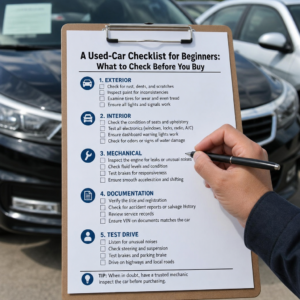
A used-car checklist for beginners can make an overwhelming purchase feel more manageable. If your budget is small and you need transportation, the pressure to buy quickly can be strong. You still deserve time to ask questions and understand what you are paying for.
No checklist can guarantee that a car will be reliable. The goal is to reduce avoidable surprises and help you know when to bring in an independent mechanic. A low asking price is only the beginning of the cost.
Decide what the car needs to do
Write down your essential trips, typical distance, passengers, and any accessibility needs. Think about whether you need room for a mobility aid, easy entry, or particular cargo space. Separate those needs from features that would simply be nice.
If your situation allows alternatives, compare the car with transit, occasional rides, or another arrangement. If a vehicle is essential, focus on practical requirements rather than the most attractive listing. You are shopping for a way to keep life working.
Set a limit that includes ownership costs
Allow for applicable taxes, title and registration charges, an insurance quote for the specific vehicle, and immediate maintenance. Add an amount for possible repairs if your budget permits. Do not spend your whole available balance on the asking price without considering these items.
If financing is involved, compare the amount financed, interest rate, loan term, fees, and total payments. A low monthly payment can hide a longer or more expensive loan. Ask for clear written figures before agreeing. Our Savings Lab helps with everyday comparisons, but it is not a substitute for reviewing the actual loan terms.
Ask questions before making the trip
Request the year, make, model, mileage, vehicle identification number, ownership history, and maintenance records if available. Ask about known problems, collision damage, title brands, and whether an independent inspection is permitted.
For a private sale, ask whether the seller is the titled owner and whether a lender still has an interest in the vehicle. Confirm the transfer process with your state motor vehicle agency. Avoid assuming that a seller can legally transfer ownership because they have the keys.
Look around the vehicle in daylight
Bring your written checklist and, if possible, someone who can help you stay focused. Uneven panel gaps, mismatched paint, strong odors, wet carpeting, visible leaks, and damaged tires are reasons to ask questions. They are clues, not a diagnosis.
Check doors, windows, seat belts, lights, mirrors, and controls. Make sure the seat adjusts enough for you to drive comfortably. Record what does not work. A broken air conditioner may be particularly important in a hot climate, even if someone calls it a minor issue.
Arrange a safe test drive
Confirm permission, insurance arrangements, and your ability to drive the vehicle safely. If you do not drive, arrange for an appropriately licensed person and professional inspection rather than attempting it yourself.
On an agreed route, notice starting, steering, braking, shifting, unusual noises, and warning lights. Try normal driving conditions rather than aggressive maneuvers. Stop if the car feels unsafe. A short drive that feels fine cannot rule out hidden mechanical problems.
Check the VIN and recall information
Compare the VIN on the vehicle with the paperwork. Use NHTSA’s recall lookup to check for reported unrepaired safety recalls. Follow any manufacturer safety instructions. Recall searches have limits, including some older and newly announced recalls, so a clear result is not a complete safety certificate.
A vehicle history report can add information about reported events, but records may be incomplete. Ask about anything that conflicts with the seller’s account. Neither a report nor a recall search replaces a mechanical inspection.
Pay for an independent inspection when possible
The Federal Trade Commission recommends an independent inspection. Ask a mechanic you choose about the inspection cost and what it includes. Request a written explanation of immediate problems, likely repairs, and anything they could not assess.
If the seller refuses an independent inspection, you can decide to leave. If paying for an inspection is difficult, that deserves consideration in your budget before shopping. It does not make a car less risky to skip the information.
Read the paperwork before paying
For dealer sales covered by the FTC Used Car Rule, read the Buyers Guide, which explains warranty information and whether the vehicle is sold as is. Compare it with the contract and ask for promises to be written down. Private sales follow different rules.
Check the final price, optional products, and every blank on documents you are asked to sign. Do not assume you have an automatic right to return a car after purchase. State rules and any seller return policy matter. Verify those terms before paying.
Give yourself permission to walk away
Pressure, inconsistent paperwork, unclear ownership, or repair costs beyond your means can be reasons to pause. You do not owe a purchase because someone spent time showing the car.
Bring this checklist, take notes, and compare choices calmly. For help organizing your immediate spending, read My Money Has to Last Until Friday. Reliable transportation matters, and protecting your limited money matters too.