
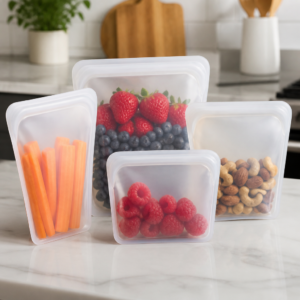
Snacks packed for an outing, berries tucked in the freezer, and sandwiches ready for the road, all without reaching for a new box of bags. A few clever habits can make your kitchen tidier and your shopping list shorter.
The Quiet Budget Item
Zip-top bags are wonderfully handy, which is exactly why a box empties so fast. Snack bags, sandwich bags, freezer bags, gallon bags: they each land in the cart on a regular basis. With a few smart habits, one box can last a very long time.
Easy Ways to Stretch Every Bag
- Wash and reuse dry-goods bags. A bag that held crackers, bread or cut vegetables can be rinsed, turned inside out and air dried for another round.
- Retire bags that held raw meat. For food safety, toss bags that held raw meat, poultry, fish or eggs rather than reusing them.
- Dry them cleverly. Prop open bags over a wooden spoon handle in a jar, or clip them to a hanger so air can move inside.
- Use containers at home. Bags shine for travel and the freezer. At home, a lidded container often does the job just as well.
- Freeze flat. Lay soup or sauce bags flat to freeze, then stand them up like files. They thaw faster and take less room.
- Label with a washable marker. Then the same bag can be relabeled next time.
Try It Free First
Look around for packaging you already have. Bread bags, cereal liners and the sturdy bags that frozen vegetables come in can hold sandwiches and snacks. Clean jars carry trail mix or cut fruit. A cloth napkin tied around a sandwich makes a charming lunch wrap. These no-cost swaps can cut your bag use a lot.
Where Silicone Storage Bags Fit In
Reusable silicone storage bags are thick, flexible pouches with a seal at the top, made to be washed and used again and again. They are a nice upgrade for anyone who packs lunches, freezes food or loves keeping a tidy fridge.
- Freezer friendly: great for berries, sliced bananas for smoothies, and portions of soup.
- Often dishwasher safe: many can go on the top rack, or turn inside out for hand washing.
- Stand-up styles: some have a flat bottom so they stay upright while you fill them.
- Versatile: some are rated for warming food in water or the microwave. Check the listing.
Honestly speaking, silicone bags cost more up front than a box of plastic ones, so they pay off when you use them often. They can hold onto strong smells like garlic, so many people keep one set for savory foods and another for fruit. Some seals take a little practice to close fully.
What to Look for When Comparing
- Size mix: snack, sandwich and gallon sizes cover most needs.
- Seal type: pinch-press, slider and zipper styles each have fans. Reviews mention how easy they are to close.
- Thickness: thicker silicone tends to hold up better over time.
- Care instructions: check for dishwasher, freezer and microwave guidance.
- Food-grade material: look for clear details on the silicone used.
- Reviews and returns: compare listings, read recent reviews and check the return terms.
Professor Cheap’s Wrap-Up
Class, today’s lesson is simple: a bag that gets a second life is a bag you did not have to buy. Rinse, dry, reuse, and treat yourself to a few sturdy silicone bags if they suit your kitchen. Your freezer will look neat and your wallet will feel lighter in the very best way.
As an Amazon Associate, Cheap101 earns from qualifying purchases, at no extra cost to you. Browse more handy finds in the Student Store.