
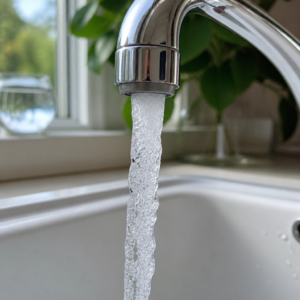
One of the easiest water-saving upgrades in your home is smaller than a quarter. A faucet aerator twists right on, gives you a soft, splash-free stream, and helps every sink use less water while still feeling just right.
Everyday Ways to Save Water at the Sink
Pull up a chair, class! Sinks get used dozens of times a day for handwashing, toothbrushing, rinsing veggies, and filling pots. Each small saving at the tap gets multiplied many times over. Here are some free and easy habits:
- Turn it off while you brush. Wet the brush, turn off the tap, and turn it back on to rinse.
- Wash produce in a bowl. Then use that water for houseplants.
- Keep a pitcher of cold water in the fridge instead of running the tap until it gets cool.
- Thaw food in the fridge rather than under running water.
- Fix drips quickly. A small drip can add up over weeks, and a worn washer or cartridge is often an easy fix.
Try It Free First
Your faucet may already have an aerator! Look at the very tip of the spout. If you see a small screen, that is it. Many aerators have their flow rate printed in tiny numbers on the side (often as “GPM,” gallons per minute). If water sprays unevenly, unscrew the aerator (by hand or with a cloth-wrapped pair of pliers), rinse the little screen, and soak it in white vinegar to dissolve mineral buildup. Pop it back on and enjoy a fresh, even stream at no cost.
Some utility companies also give away water-saving aerators and shower heads. It is worth a quick call or a look at their website.
Where Faucet Aerators Fit In
An aerator is a tiny screen insert that screws onto the end of your faucet. It mixes air into the water, so the stream feels full and soft while less water flows out. It also cuts down on splashing, which keeps your counters drier.
Bathroom sinks are a perfect spot for a lower-flow aerator, since handwashing and toothbrushing do not need a strong blast. Look for the WaterSense label, which the EPA uses for bathroom faucets and aerators that flow at 1.5 gallons per minute or less. In the kitchen, many people prefer a slightly higher flow for filling pots, and swivel aerators can add a handy spray mode for rinsing dishes.
What to Look For When Comparing
- Thread type: check whether your faucet has male threads (on the outside) or female threads (on the inside).
- Size: standard, junior, and tom thumb are common sizes. Many sellers include an adapter.
- Flow rate: lower GPM for bathrooms, a bit higher for kitchens.
- Swivel or spray options: handy for kitchen sinks.
- Finish: chrome, brushed nickel, or black to match your faucet.
- Reviews and return terms: compare a few listings.
Tip: unscrew your current aerator and take it with you to compare, or measure it before ordering.
Professor Ima’s Wrap-Up
Big savings sometimes come in tiny packages. Clean your aerator, turn off the tap while you brush, and consider a water-saving aerator at each sink. That is a lesson that flows straight into your budget. Class dismissed, my water-wise students!
As an Amazon Associate, Cheap101 earns from qualifying purchases, at no extra cost to you. Browse more handy finds in the Student Store.