
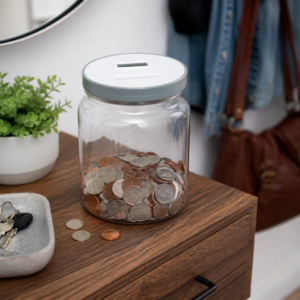
Spare change is the easiest money you will ever save, because you have already spent it once without missing it. Toss those coins somewhere smart, let them pile up, and you may be delighted by what a few months of jingling can become.
How to Turn Spare Change Into Real Savings
Welcome, class! Today’s lesson is about the humble coin. A quarter here and a dime there may not look like much, but coins are sneaky. They pile up in pockets, cup holders, and the bottom of purses. Gather them in one place with a plan, and they turn into a cheerful little fund.
Build the habit
- Empty your pockets every evening. Pick one spot by the door or on the dresser and make it the coin’s new home.
- Pay with cash now and then. Breaking a bill for small purchases naturally brings home change.
- Do a house sweep. Check the couch cushions, car console, coat pockets, and junk drawer. It is a little treasure hunt.
- Add a bonus rule. Some savers toss in every $1 bill too, or every five dollar bill. That speeds things up nicely.
- Give it a goal. Label your jar “Beach Trip” or “Holiday Gifts” so each coin has a purpose.
Cash it in the smart way
When the bank is full, you have choices. Many banks and credit unions accept rolled coins from their customers, and some still offer free coin counting for account holders, so it is worth asking at your branch. Self-service coin kiosks in stores are convenient, but many charge a fee for cash, so read the screen carefully. Some kiosks skip the fee if you choose a gift card instead, which can be handy if it is a store you already use.
Once your coins become dollars, move them straight into savings or spend them on the goal you picked. That way the fun ends with a reward, not a forgotten pile.
Pair coins with a digital round-up
If you mostly pay by card, you can still play. Some banks offer round-up features that move the difference from each purchase into savings. It is the modern cousin of the coin jar, and you can use both at once.
Try It Free First
A clean glass jar, coffee can, or old peanut butter container works perfectly well. Tape a slip of paper to the side and jot down a rough total each month, or simply enjoy watching the level rise. A clear jar has a lovely way of encouraging you to keep feeding it.
Where a Digital Counting Coin Bank Fits In
A digital coin bank counts as you drop coins in, showing a running total on a small screen. No more guessing or dumping everything on the table to count. Many are designed for United States coins and recognize pennies, nickels, dimes, and quarters by size.
It can suit anyone who likes seeing exact numbers, savers working toward a set goal, and grandkids who get a thrill from watching the total tick up. Counting accuracy varies by model, so treat the display as a helpful estimate and confirm the total when you cash in.
What to Look For When Comparing
- Coin types: make sure it counts the currency you use.
- Display: a large, clear screen is easier to read.
- Capacity: a bigger bank means fewer trips to empty it.
- Power: check the battery type and whether the total is saved if batteries are changed.
- Easy emptying: look for a simple bottom opening or removable lid.
- Reviews and returns: read recent reviews about counting accuracy and check return terms.
Professor Cheap’s Wrap-Up
Spare change is proof that saving does not need to be serious to be successful. A jar, a can, or a clever counting bank all do the job. Drop in your coins, watch them grow, and treat yourself to the goal when you get there. Jingle on, dear students!
As an Amazon Associate, Cheap101 earns from qualifying purchases, at no extra cost to you. Browse more handy finds in the Student Store.