
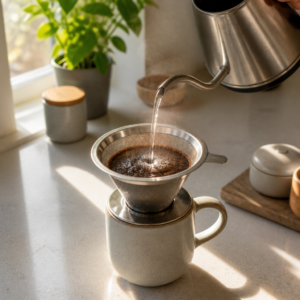
A slow, peaceful pour, a lovely aroma, and a cup that tastes like a cafe treat. Pour-over coffee is simple to learn, and a reusable cone filter means you can enjoy it every morning without ever buying paper filters.
Why Pour-Over Is a Thrifty Pleasure
Pour-over brewing needs very little: hot water, ground coffee, a cone, and a mug. There is no machine to plug in, and it makes exactly the amount you want, so nothing is left to go stale in a pot. Many people find it becomes a calm little ritual that starts the day on a sweet note.
How to Brew Pour-Over, Step by Step
- Heat the water. Bring water to a boil, then let it rest for about 30 seconds so it is just off the boil.
- Measure the coffee. A common starting point is 2 level tablespoons of coffee for each 6 ounces of water. Adjust to taste.
- Use a medium grind. About the texture of coarse sand. Finer brews slower and stronger, coarser brews faster and lighter.
- Let it bloom. Pour just enough water to wet the grounds, then wait about 30 seconds while they puff up and release gas.
- Pour slowly in circles. Add the rest of the water in small, steady spirals, keeping the grounds just covered.
- Enjoy and adjust. If the cup tastes weak, try a little more coffee or a finer grind. If it tastes bitter, try a coarser grind.
Try It Free First
You can try the pour-over idea before buying anything. A clean cotton handkerchief or a square of thin muslin set in a small strainer over a mug works as a cloth filter. Rinse it well after each use. Or try “cowboy coffee”: stir grounds into hot water in a saucepan, let them settle for a few minutes, then pour gently. Both are old-time methods that cost nothing extra.
Where a Reusable Pour-Over Filter Fits In
A reusable pour-over filter is usually a cone of fine stainless steel mesh that sits right on top of your mug or carafe. Some are cloth filters made to fit a cone, and there are also permanent filters designed for standard drip machines.
- No more paper filters: rinse and reuse every day.
- Fuller flavor: metal mesh lets more natural coffee oils through, which many people describe as a richer cup.
- Compact: easy to store and lovely for travel or camping.
- Easy cleanup: tap the grounds into the compost and rinse.
An honest note: metal filters may let a few very fine particles into the cup, which some people enjoy and others do not. Paper filters also catch more of the coffee oils called cafestol, so anyone keeping a close eye on cholesterol may want to ask their doctor which they prefer.
What to Look for When Comparing
- Mesh layers: double-layer mesh tends to catch more fine grounds.
- Stand or base: a wide, stable base that fits your favorite mug.
- Size: single-cup cones or larger ones for a carafe.
- Handle: a small tab or handle makes it easy to lift off when hot.
- Machine fit: for drip-machine filters, check your brewer’s basket shape and size.
- Reviews and returns: compare listings, read recent reviews and check the return terms.
Professor Cheap’s Wrap-Up
Class, some of life’s nicest moments come from slowing down for a few minutes. Pour, breathe, sip, and enjoy a cafe-worthy cup made right at home. No paper, no fuss, and plenty of savings left to share.
As an Amazon Associate, Cheap101 earns from qualifying purchases, at no extra cost to you. Browse more handy finds in the Student Store.