
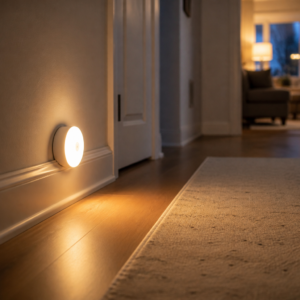
A soft glow that greets you in the hallway at night, then quietly turns itself off. Motion-sensor night lights make late-night trips to the kitchen or bathroom easy and confident, and many use very little energy along the way.
Good evening, class! Today’s lesson is a bright idea, quite literally. Lighting the path through your home at night is one of the simplest ways to make it feel welcoming and easy to move through after dark. Best of all, it can be done for very little money.
How to Light Your Home Smartly at Night
- Trace your nighttime path. Walk the route you take most often at night, such as bedroom to bathroom or bedroom to kitchen, and note where a little light would help.
- Light low. Lights placed near the floor brighten the walking surface without shining in your eyes.
- Choose a warm, gentle glow. Many people find softer, warmer light more pleasant at night and easier on sleepy eyes.
- Cover the key spots. Hallways, stairways, bathrooms, entryways and the kitchen are favorite places.
- Keep the path clear. A tidy walkway, with cords tucked away and rugs lying flat, pairs perfectly with good lighting.
- Think inside cabinets and closets. Small lights make it easy to find things in deep closets and under the sink.
Why Motion Sensors Are So Handy
Regular night lights stay on all night long. Motion-sensor versions switch on when they detect movement and turn off on their own after a short time. That means light exactly when you want it and no glow when the room is empty. Many also have a light sensor so they only switch on when it is dark. LED bulbs are known for using little electricity, so a few small LED night lights can brighten your home at a very modest cost.
Try It Free First
Look around for light you already own. A small lamp on a timer, a plug-in night light tucked in a drawer, or leaving a bathroom light on with the door partly open can all light the way. A flashlight kept on the nightstand is handy, too. Notice which spots you like lit, and you will know exactly where a motion-sensor light would be most useful.
Where Motion-Sensor Night Lights Fit In
Motion-sensor night lights come in a few styles. Plug-in models fit right into an outlet. Battery-powered or rechargeable versions stick or screw onto walls, stair edges, closets and cabinets, so you can place them anywhere, even where there is no outlet. Light strips can glow under a bed frame or along a hallway baseboard.
They suit households with early risers and night owls, families with kids, guests staying over, and anyone who likes a gentle glow without hunting for a switch. The button on this page is a search for this type of product, so compare listings, reviews, sizes and return terms before choosing.
What to Look For When Comparing
- Power source: Plug-in, battery or USB rechargeable, depending on where it will go.
- Light color: Warm white for a soft glow, cool white for a brighter look.
- Brightness settings: Adjustable levels let you fine-tune each spot.
- Sensor range and timer: Check how far it detects motion and how long it stays on.
- Dusk-to-dawn sensor: Keeps lights off during daylight.
- Mounting: Adhesive, magnetic or screw-in options for walls and cabinets.
Professor Ima’s Wrap-Up
A home that greets you with a gentle glow at midnight is a home that feels cared for. Trace your path, light it low and warm, and let the sensors do the rest. Sweet dreams, class, and see you bright and early for the next lesson!
As an Amazon Associate, Cheap101 earns from qualifying purchases, at no extra cost to you. Browse more handy finds in the Student Store.