
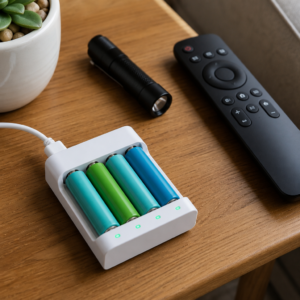
Remotes, game controllers, flashlights and toys can keep humming along on the same set of batteries for years. With a good charger and a few simple habits, rechargeable batteries can be one of the thriftiest upgrades in your whole home.
Good afternoon, class! Let’s talk about the little cylinders that power so much of daily life. Single-use batteries are handy, but each one is used once and then it is done. Rechargeable batteries can be refilled with power over and over, which makes them a favorite of thrifty households everywhere.
How to Get the Most From Rechargeable Batteries
- Start with your busiest gadgets. Game controllers, wireless mice and keyboards, toys, flashlights and digital cameras go through batteries quickly, so they are the best place to begin.
- Keep a charged set ready. Own a few more batteries than you need so a fresh set is always waiting while the other set charges.
- Charge in pairs or sets. Batteries that work together in a device do best when they are charged and used together.
- Use the matching charger. Follow the battery maker’s directions and use a charger designed for that battery type.
- Store them cool and dry. A drawer or a small battery case keeps them organized and ready.
- Mark your sets. A dot of colored nail polish or a colored sticker helps you keep sets together.
Where Single-Use Batteries Still Shine
Honest professors share the full picture. Very low-drain items, such as wall clocks, may run so long on one battery that rechargeables offer less advantage there. Safety devices such as smoke alarms and carbon monoxide alarms should always use exactly the type of battery the manufacturer recommends, so check the manual. For everything else that gobbles power, rechargeables are a lovely fit.
Try It Free First
Before buying anything, gather every battery-powered item in your home and make a quick list of which battery sizes they use and how often you change them. You might find that a few gadgets use most of your batteries. Also look for devices that can be plugged in or charged by USB instead. Many people discover they already own chargers and cords for this. And when single-use batteries are finished, look for a battery recycling drop-off at hardware or home stores in your area.
Where Rechargeable Batteries and Chargers Fit In
The most common household rechargeables are nickel-metal hydride (NiMH) batteries in AA and AAA sizes. Many are rated to be recharged hundreds of times, and “low self-discharge” versions are designed to hold their charge well while sitting in a drawer. Kits often bundle batteries with a charger, which is an easy way to start. Some chargers have individual indicator lights for each battery so you know exactly when each one is ready.
They suit families with kids’ toys, gamers, photographers, and anyone who uses a lot of remotes and flashlights. The button on this page is a search for this type of product, so compare listings, reviews, sizes and return terms before choosing.
What to Look For When Comparing
- Sizes: Make sure the set covers the sizes you use most, often AA and AAA.
- Capacity (mAh): Higher capacity can mean longer run time per charge.
- Low self-discharge: Helps batteries stay ready in storage.
- Charger features: Individual bay indicators and automatic shutoff when full.
- Rated recharge cycles: Check how many times the maker says they can be recharged.
- Storage case: Keeps sets organized and contacts protected.
Professor Ima’s Wrap-Up
Every time you pop a recharged battery into the remote, give yourself a little gold star. You are keeping money in your pocket and batteries out of the trash. Charge them up, keep a spare set ready, and let the good times roll. Class dismissed!
As an Amazon Associate, Cheap101 earns from qualifying purchases, at no extra cost to you. Browse more handy finds in the Student Store.