
Imagine finding any bill, warranty, or tax record in under a minute. A simple filing system turns a stack of mail into a calm, orderly home for your paperwork, and it can be set up in one cozy afternoon.
Step One: Sort Into Three Piles
Gather round, students! Grab all the papers in your home and make three piles:
- Action: bills to pay, forms to fill out, and anything with a deadline.
- Keep: records you need to hold on to for a while or for good.
- Let go: ads, duplicates, and papers you are finished with. Shred anything with private details.
Step Two: Create Simple Categories
Now give your “keep” pile some friendly folder names. Broad categories work better than dozens of tiny ones. A handy starter set:
- Home (rent or mortgage, property tax, repairs)
- Utilities (electric, water, gas, phone, internet)
- Bank and credit card statements
- Insurance (home, auto, health)
- Medical records and receipts
- Car (title copy, registration, maintenance)
- Taxes, with one folder per year
- Warranties and manuals
Put the newest papers at the front of each folder. That way the most recent bill is always the first one you see.
Step Three: Keep a Little Mail Station
Most paper piles start at the front door. Set a small tray or basket where you open mail. Open each piece right away, toss the junk, put bills in the action spot, and file the rest once a week. Ten minutes on a Sunday keeps everything shipshape.
Step Four: Do a Yearly Tidy
Once a year, maybe after you file taxes, flip through each folder. Move the finished tax year to long-term storage and let go of statements you no longer need. The IRS website explains how long to keep tax records, and your bank or insurance company can tell you about their papers. Truly important originals, like deeds and wills, deserve a special safe spot of their own.
Try It Free First
A sturdy shoebox or a cardboard shipping box makes a fine starter file. Use old envelopes or folded cereal box cardboard as dividers, and write the category names on them with a marker. Ask friends or a local office if they have leftover folders, since many people are happy to pass them along.
Where a Household File Box Fits In
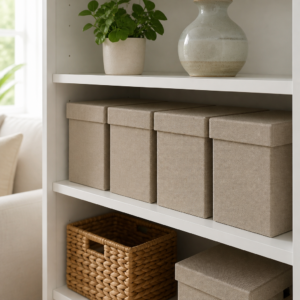
A household file box with hanging folders gives your system a neat, lasting home. Folders slide easily, nothing gets bent, and many boxes have a lid and a handle so you can tuck them onto a shelf or carry them to the table. Some even come with a latch or lock.
It suits apartment and condo living, people who do not have room for a filing cabinet, and anyone who likes a tidy, matching look on the bookshelf.
What to Look for When Comparing
- Size: letter size suits most home papers, while legal size fits longer documents.
- Folders included: some boxes come with hanging folders and tabs, others do not.
- Material: plastic resists moisture, while fabric and cardboard styles are lighter.
- Lid and handle: helpful for dust protection and moving the box around.
- Stackability: nice if you plan to add a second box later.
- Reviews and return terms: compare a few listings before choosing.
Professor Ima’s Wrap-Up
An organized file is like a good friend: always there when you need it and never making a fuss. Sort, label, and give your papers a happy home, and you will have more time for the fun parts of life. That is an A-plus in household management!
As an Amazon Associate, Cheap101 earns from qualifying purchases, at no extra cost to you. Browse more handy finds in the Student Store.