
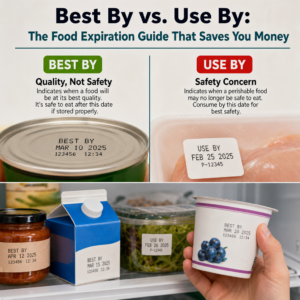
Every year, households toss billions of dollars worth of perfectly good food straight into the trash because of printed dates on packaging. When you are living on a tight budget, throwing away food feels terrible. It is like throwing hard earned cash directly into the garbage bin. Much of this waste happens because of confusion over what printed food dates actually mean.
Many shoppers believe that once a container passes the date stamped on the top or bottom, the food inside turns toxic overnight. In reality, food dates in the United States are almost never about safety. Understanding how food manufacturers determine these dates will protect your health, save you money, and give you the confidence to shop clearance racks without fear.
The Truth Behind the Labels: Safety vs Quality
Except for infant formula, federal law does not require expiration dates on food products. States regulate dairy and meat in varying ways, but the vast majority of dates you see on canned goods, dry pastas, cereal boxes, condiments, and frozen goods are voluntary manufacturer estimates of peak flavor and texture, not safety deadlines.
Here is what the three most common phrases actually mean:
1. Best If Used By or Best Before
This date is strictly an estimate of peak quality. The company guarantees that the crackers will be at their crispiest, or the pasta sauce will have its freshest tomato flavor, before this date. Passing this date does not mean the food has gone bad. It simply means the flavor might be slightly muted or the texture a little less crisp. Consuming it weeks or months afterward is generally safe if the packaging remains sealed and undamaged.
2. Sell By
A Sell By date is intended for the store manager, not the consumer. It tells the grocery store inventory staff how long to display the product on the sales floor. Stores often mark these items down to clearance prices when they get within a day or two of the Sell By date. If you buy milk, yogurt, or poultry near or on its Sell By date, it will typically remain fresh and safe in your home refrigerator for several days or even weeks afterward when stored at forty degrees Fahrenheit or colder.
3. Use By
This is the last date recommended for the product to be used while at peak quality. Like the Best By label, it is set by the manufacturer for flavor and texture, with the notable exception of infant formula. With infant formula, never use the product past the Use By date because the delicate nutrients break down and may not support an infant properly.
How to Shop Clearance and Salvage Groceries Safely
Because stores want to rotate stock, they frequently discount food heavily when it approaches its printed date. Salvage grocery stores and clearance bins can save you fifty to seventy percent on your total food bill. You can shop these deals with total confidence by using basic inspection rules.
The Can Inspection Rule
Canned goods that are kept dry and cool can remain safe to eat for years past their printed date. When evaluating clearance cans, check for structural defects:
- Pass on bulging or swollen cans: Any outward swelling indicates bacterial activity producing gas inside the can. Never open or eat from a swollen can.
- Avoid deep dents on seams: A shallow ding on the side of a can is harmless. A sharp dent that crosses the top or side seam can compromise the airtight vacuum seal, allowing air and bacteria inside.
- Skip leaking or heavily rusted cans: Rust can eat microscopic pinholes into the metal, compromising the sterile environment.
Boxed and Dry Staples
Dry grains, white rice, rolled oats, dried beans, and dry pasta do not support bacterial growth if they stay dry. They can be safely stored and eaten long after their printed dates. As long as the box is sealed, dry, and free of pantry pests, you can take advantage of deep markdown discounts on dry goods.
Trust Your Senses Over the Stamp
When determining whether an item in your kitchen is still good to eat, rely on your natural senses rather than a printed number on the label.
Look: Inspect the food for visible mold, unnatural discoloration, or unusual cloudiness in liquid. If mold is growing on soft foods like bread, soft cheese, or cooked leftovers, discard the entire portion.
Smell: Your nose is an extraordinary spoiled food detector. Spoiled milk smells sharp and sour. Rancid oils smell stale and like wet cardboard. Bad meat gives off a strong, unpleasant ammonia or sulfur odor. If an item smells clean and normal, it is almost certainly good to eat.
Texture: Fresh food changes texture when it goes bad. Slime on poultry, mushy slippery spots on vegetables, or curdling in dairy are clear warning signs to discard the item.
Learning the difference between quality dates and actual safety helps you rescue food from your own fridge and take advantage of grocery clearance markdowns with complete confidence. Keep your food stored properly, trust your senses, and stop throwing away money.