
When you rely on SNAP or EBT benefits to buy food every month, the math can be brutal. Grocery store inflation has made basic protein, milk, and fresh produce painfully expensive. For millions of households, the card balance drops to single digits well before the month is over. Finding ways to stretch those government benefits without sacrificing fresh, wholesome nutrition is essential for survival.
One of the most effective and underused programs in the United States is the SNAP incentive network. Known nationally under names like Double Up Food Bucks, Market Match, or Fresh Access Bucks, these programs match your EBT spending dollar for dollar on fresh produce. If you know where to go and how to use them, you can walk away with twice as much fresh food every single month without spending an extra penny of your own money.
How SNAP Matching Programs Work
The concept behind these programs is straightforward. They are funded through federal grants and non profit partnerships to accomplish two things: support local farmers and help low income families afford fresh produce. In practice, they turn every dollar you spend into two dollars.
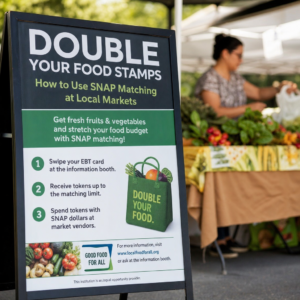
Here is a typical scenario at a participating farmers market:
- You walk up to the market information booth with your EBT card.
- You ask to withdraw ten or twenty dollars from your monthly food balance.
- The clerk swipes your EBT card for twenty dollars and gives you twenty dollars in market tokens or scrip that you can use on any SNAP approved grocery item.
- The clerk then hands you an additional twenty dollars in matching produce tokens or vouchers completely free.
Just like that, you turned twenty dollars of benefit money into forty dollars of purchasing power. The matching tokens are usually dedicated specifically to locally grown fruits, vegetables, culinary herbs, and sometimes food producing plants or seeds.
Step by Step Guide to Your First Market Visit
Visiting a farmers market when you are on a tight budget can feel intimidating if you have never done it before. High end farm stands often look expensive. Knowing the process in advance removes the stress and ensures you get the maximum value.
1. Locate a Participating Market Near You
Not every single farm stall or weekend market accepts EBT, and not all that do participate in match programs. Search online for Double Up Food Bucks in your state, or check your state department of social services directory. Most programs have dedicated websites with an interactive map showing every farm stand, market, and neighborhood grocery store that matches benefits.
2. Find the Central Information Desk First
Do not go directly to individual farmer stalls to swipe your card. Individual growers rarely carry EBT terminals. Look for the central tent or umbrella marked Information, Market Manager, or SNAP / EBT. The staff working there are trained to help and welcome benefit recipients every single market day.
3. Ask About Daily Matching Caps
Every region sets its own daily matching limits. In many cities, the match is ten or twenty dollars per day. In other areas, the match is completely unlimited during peak harvest season. Ask the person at the desk what the daily match limit is so you can withdraw the exact right amount to get the maximum free bonus.
Participating Grocery Stores and Corner Markets
Farmers markets only run once or twice a week, and they can be hard to reach if you rely on public transit. Fortunately, matching programs have expanded directly into independent supermarkets, discount grocery co-ops, and neighborhood corner stores across the country.
In participating brick and mortar stores, the match happens automatically at the cash register. When you buy fresh fruits and vegetables using your EBT card, the register system instantly issues a printed coupon voucher on your receipt or applies a fifty percent discount to your produce total. That coupon can then be redeemed on your next grocery run for more fresh produce.
Buying Food Producing Plants with SNAP
A little known rule in the federal SNAP guidelines is that households can purchase food producing seeds and starter plants with their benefits. This applies both at grocery stores and at farmers markets.
If you have access to a small patch of dirt, a sunny porch, or even a wide windowsill, you can buy starter tomato pots, bell pepper plants, or seed packets using your card. A four dollar tomato plant purchased with benefit funds can yield dozens of pounds of fresh food over the summer. When combined with market matching programs, you can often pick up starter plants using your bonus tokens, multiplying your food return for months to come.
Key Tips for Maximizing Every Dollar
To get the most out of these incentives, keep these simple guidelines in mind:
- Tokens rarely expire quickly: If you withdraw twenty dollars and do not spend all your matching tokens that day, you can save them in an envelope for the following week.
- Shop toward the end of the market hours: Vendors do not want to pack up heavy produce crates and carry them back to their farms. During the final hour of the market, many farmers will offer two for one deals or give extra produce for your tokens.
- Prioritize hearty storage crops: Focus your matching tokens on foods that last for weeks without spoiling, such as winter squash, sweet potatoes, carrots, onions, and apples.
Receiving SNAP assistance is a legal entitlement designed to keep you and your family nourished. Taking full advantage of dollar for dollar matching programs allows you to bring home fresh, crisp, nutrient dense produce while protecting your precious grocery budget.