
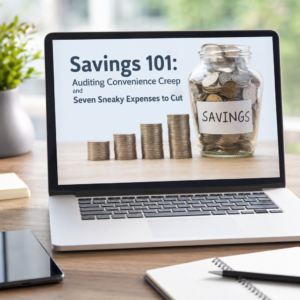
Welcome to the seventh module of your Masters in Savings curriculum at Cheap101.com. When household budgets run into financial strain, people usually assume the culprit is a major discretionary expense, such as an extravagant vacation, an expensive electronic gadget, or an unexpected car repair. Yet financial audits consistently reveal that the primary driver of steady financial depletion is far quieter and significantly more insidious. That phenomenon is known as convenience creep.
Convenience creep occurs when small, outsourced services slowly integrate into your daily routine until they feel indispensable. Over time, recurring app micro-transactions, delivery surcharges, and unattended digital subscriptions quietly siphon hundreds of dollars from your accounts every single month. In today’s lecture, we examine how convenience pricing works against consumer wealth, execute a line-by-line financial audit, and eliminate the seven most common hidden drains on your monthly cash flow.
1. The Behavioral Economics of Frictionless Spending
Modern service platforms spend billions of dollars engineering frictionless transactions. In the traditional retail economy, parting with physical cash or handing over a payment card required active friction, which triggered a natural cognitive pause. Today, stored mobile payment credentials, one-click ordering systems, and automated recurring billing models remove all psychological hesitation from spending money.
When financial friction disappears, consumers willingly pay extraordinary premiums for minor conveniences. A cup of coffee that costs thirty cents to brew at home becomes a seven-dollar app-ordered delivery when factoring in service charges, driver tips, and menu price markups. Over thirty days, that single friction-free choice costs more than two hundred dollars. Auditing convenience creep is not about living an austere life without pleasure. It is about actively reclaiming conscious control over where your hard-earned capital flows.
2. The Seven Sneaky Expenses to Eliminate This Week
To begin plugging your financial leaks immediately, target these seven pervasive recurring drains during your audit:
1. Food Delivery Service Upcharges: Third-party delivery applications do not simply charge a visible delivery fee. They routinely inflate the base menu prices of restaurants by fifteen to twenty-five percent, then layer platform operations fees, regulatory charges, and driver tips on top. A thirty-dollar takeout order easily balloons into a fifty-five-dollar delivery total. If you choose to enjoy prepared takeout food, call the restaurant directly and pick up the order yourself.
2. Ghost Subscriptions and Forgotten Trials: The average consumer severely underestimates how many active digital subscriptions they maintain. From fitness apps and premium cloud storage tiers to entertainment streaming bundles you have not watched in six months, recurring digital fees slip under the radar. Use your bank statements to identify and cancel every single non-essential digital recurring fee.
3. Pre-Cut Produce and Packaged Convenience Foods: In the grocery department, processing time carries an exorbitant markup. Purchasing pre-chopped onions, bagged shredded lettuce, or pre-cut melon slices often costs triple the unit price of whole, uncut produce. Spending ten minutes with a cutting board and a sharp knife on Sunday afternoon instantly recovers that margin.
4. Point-of-Sale Micro-Insurances: E-commerce checkout flows increasingly prompt buyers to add two-dollar protection plans, extended warranties, or shipping insurance policies on low-cost consumer goods. In the overwhelming majority of cases, statutory merchant return policies or the consumer purchase protection built directly into your credit card already cover transit loss and manufacturer defects, making these add-on policies completely redundant.
5. Automated Surcharges for Paper Invoices: Many utility providers, telecommunications carriers, and internet providers quietly levy a monthly fee of two to five dollars simply to print and mail a paper billing statement. Enrolling in automated electronic billing eliminates this administrative drain without altering your service in any way.
6. Unchecked In-Store Bottled Water and Beverage Purchases: Buying single-serving beverages at gas stations, pharmacy registers, or convenience stores represents one of the steepest markups in retail, frequently exceeding a one-thousand-percent premium over filtered municipal tap water. Investing in a durable stainless steel insulated bottle and carrying cold filtered water eliminates this recurring daily cash bleed entirely.
7. ATM and Out-of-Network Processing Surcharges: Paying three to five dollars in transaction fees to withdraw twenty dollars from an out-of-network automated teller machine represents an immediate fifteen to twenty-five percent penalty on your own cash. Plan cash withdrawals around your primary bank branch or utilize grocery checkout cash-back options, which provide fee-free cash withdrawals directly at the register terminal.
3. Conducting the 30-Day Statement Audit Protocol
To successfully eradicate these hidden fees, schedule a dedicated sixty-minute audit session this weekend using this three-step protocol:
- Export Three Months of Raw Statements: Download the last ninety days of transaction history from your checking account and primary payment cards into a basic spreadsheet.
- Highlight Recurring Line Items: Color-code every recurring vendor name in yellow. Calculate the total monthly burn rate of these automatic debits.
- Enforce the Thirty-Day Rule: Cancel any recurring subscription or optional service you have not actively utilized within the preceding thirty days. If you genuinely miss the service a month from now, you can always reactivate it manually at a promotional rate.
Eliminating convenience creep puts immediate discretionary funds back into your monthly budget without requiring a major sacrifice in quality of life. Reclaim this capital today, and redirect those funds toward compounding savings accounts and targeted investment goals.