
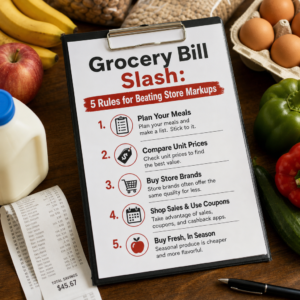
Welcome back to class, bargain hunters! Today we’re tackling the single largest variable line item in most household budgets: the grocery bill. Supermarkets spend millions analyzing human behavior so you leave with a lighter wallet. Here are Professor Ima’s five non-negotiable rules to beat the system and keep your hard-earned dollars where they belong.
Rule 1: Eye Level Is “Buy Level”
Big food brands pay grocery chains massive “slotting fees” to place their highest-margin items directly between 4 and 5 feet off the ground-right at your eye line. Whenever you’re browsing canned goods, pastas, or spices, force yourself to look at the very top and bottom shelves. Store brands and bulk packaging with identical ingredients usually hide down by your ankles for 30% to 50% less.
Rule 2: Master the Unit Price, Ignore the Sticker
A package marked “$3.49” sounds cheaper than one marked “$4.99,” until you realize the first contains 8 ounces ($0.44/oz) and the second contains 20 ounces ($0.25/oz). Train your eyes to read the tiny square on the shelf tag that shows the unit price (per ounce, per pound, or per quart). The bold sticker price is designed to deceive; the unit price tells the objective truth.
Rule 3: Shop the Perimeter First
The outer loop of almost every grocery store houses whole, unbranded staples: produce, eggs, dairy, and unprocessed meats. The center aisles house packaged foods with massive markups for cardboard boxes and preservatives. Fill 80% of your cart along the perimeter before you venture into the center aisles for specific pantry essentials like oats, beans, and cooking oils.
Rule 4: Know the “Loss Leaders”
Every Wednesday when weekly store flyers drop, the items on the front page are typically priced below wholesale cost. Stores take an intentional loss on whole chickens, strawberries, or butter just to pull you through the automatic doors. Buy the loss leaders, stock up on freezer-friendly sale items, and skip the full-price extras displayed on endcaps.
Rule 5: Never Shop Without a “Depot Check”
The most expensive groceries are the ones you buy twice because you forgot you already had them. Spend three minutes checking your refrigerator crisper and pantry shelves before walking out the door. Meal-plan backward from what needs to be eaten first, rather than shopping for a fresh week from scratch.
Professor Ima’s Extra Credit: Keep your Amazon Associate tag ready when writing recipe guides or storage tips. Simple add-ons like reusable produce bags or stainless freezer containers earn affiliate commissions every time a reader upgrades their kitchen organization.